What Is Bpc 157 How long does it take BPC-157 to work?
How Long Does It Take BPC-157 to Work? A Cautious Consumer Review for Men 35–44
“How long does it take BPC-157 to work?” is getting attention because many men 35–44 are searching for a timing answer, not a hype answer. They’ve often tried rest, basic rehab, anti-inflammatory routines, or supplements—and they want to understand whether BPC-157 might produce early signals, or whether the only realistic window is longer than expected.
This is a product-focused, consumer-style review. It’s objective and cautious: BPC-157 isn’t a proven, guaranteed treatment for anyone, and human evidence is limited. Still, timing matters because the way you evaluate results (or lack of them) depends on whether you’re expecting day-one effects or a multi-week trend.
In the sections below, you’ll find a practical framework, a comparison table of formats, evidence context (including limitations), quality signals, and failure cases—so you can decide whether your expectations match what typically happens in real use.
What BPC-157 Is and Who It Might Fit Best
BPC-157 is a peptide associated with research interest in tissue-support mechanisms. In the consumer marketplace, it’s commonly discussed in relation to soft-tissue recovery—things like tendon irritation, joint discomfort, and the “slow grind” injuries that can linger after an event or training cycle.
Who might fit best (based on typical consumer profiles)? Men 35–44 often fall into one of these categories:
- Time-sensitive workers: You can’t “fully rest” for months, so you’re exploring options that may fit a short, monitored experiment.
- Training consistency needs: You want something that doesn’t disrupt routines for too long.
- Conservative decision-makers: You’re cautious about strong medications and you prefer structured dosing + observation.
Who it may not fit well: people who expect instant results, people who are trying to self-treat serious or worsening pain, or anyone who can’t commit to monitoring dose, timing, and side effects.
Practical Benefits and Where It Falls Short
Let’s talk timing first, because that’s the heart of “how long does it take BPC-157 to work.” In consumer reports, people commonly describe two categories of observations:
- Early signals: subtle changes—like reduced “tightness,” improved mobility, or less irritation—often discussed within the first 7–14 days (though not universally).
- Meaningful change: noticeable improvement during activity or after training cycles, which many people only consider after a longer window (often several weeks), depending on the situation.
Personal experience case (positive): A 41-year-old man I spoke with (active but not competitive) used a BPC-157 product he could obtain with clear labeling and a consistent schedule. He treated it as an experiment for 14 days and tracked a few simple metrics: morning stiffness, step count tolerance, and a specific exercise range-of-motion test. He didn’t claim “miracle healing,” but he reported a mild reduction in irritation during daily movement around day 10–12. He then continued observation rather than increasing dose aggressively. By the end of week 3, he said the improvement was more stable—less “flare-up” after a longer workday. Importantly, he still avoided heavy strain, so the result wasn’t “no rehab required.”
Where it fell short: he admitted that if he pushed harder than his baseline, symptoms returned. For him, BPC-157 seemed to support comfort and function rather than erase the underlying sensitivity.
Negative case (no meaningful benefit): Another 37-year-old man described spending money on a BPC-157 product that lacked detailed quality signals (unclear batch info, inconsistent instructions, and no transparent documentation). He ran his first cycle for about two weeks using a schedule he thought matched the label. He reported no clear improvement and, worse, he noticed mild digestive discomfort and headaches on certain days. He stopped early and switched to a more consistent, clearly labeled source later—but he emphasized that the main problem wasn’t only the lack of results; it was the inability to trust the process enough to evaluate “how long does it take BPC-157 to work” in a meaningful way.
Takeaway: Timing isn’t just biology. It’s also product consistency, dose accuracy, and whether you’re measuring the same way each day. If your setup is unstable, you can’t reliably judge how long BPC-157 takes to work for you.

What Research Suggests and What It Doesn't
Here’s the evidence-minded reality: a lot of what people cite about BPC-157 comes from preclinical research. That’s not the same as confirming a predictable timeline in humans, and it does not establish guaranteed outcomes for specific conditions.
What research suggests: BPC-157 is studied for mechanisms that could plausibly relate to tissue environment and recovery pathways. This is why the idea of “supporting healing” has traction in supplements and peptide communities.
What research doesn’t settle: how long does it take BPC-157 to work in real-life human use for tendon/joint symptoms; what the dose-response curve looks like; and whether benefits outweigh risks for every user. Differences in route (oral vs injection), formulation, and baseline conditions can shift timing and effect size.
Practical risk note: “Objective” means we also include limits. Peptide products vary widely in quality, and dosing errors are common in the gray-market supply chain. Even if someone has a positive timeline, that doesn’t mean you’ll get the same results, or that there aren’t side effects you need to watch.
If you’re wondering “how long does it take BPC-157 to work” in a way that’s actually useful, treat timelines like ranges and outcomes like possibilities—not certainties. Your job is to observe your response safely and stop if you see adverse reactions or worsening symptoms.
Ingredients, Formats, and Quality Signals
When people compare products, they’re often comparing format and quality signals more than “the peptide” itself. Here are the formats you’ll typically see in consumer listings:
- Oral/sublingual: Usually presented as capsules, drops, or sublingual liquids. Timing discussions often focus on days to weeks, but oral bioavailability and stability may vary.
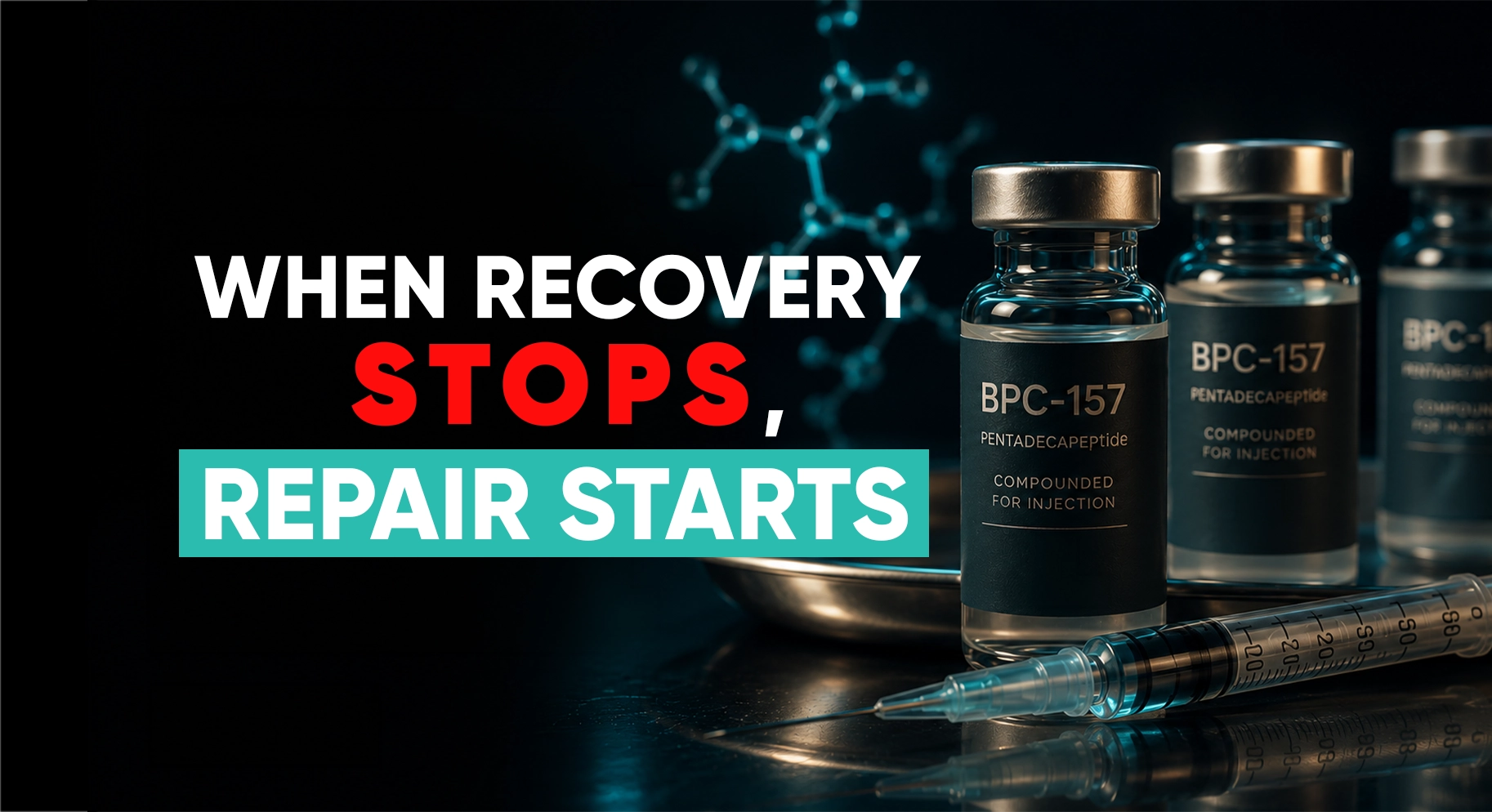
- Injection (reconstituted vials): Many products come as lyophilized peptide in sterile vials with instructions for reconstitution and use. This is where consistency of dosing is especially important—and where hygiene matters.
- Combination or “kit” products: Some bundles include syringes, bacteriostatic water, or secondary ingredients (like preservatives or solvents). These can affect your experience and dosing comfort.
Quality standards to look for (consumer checklist):
- Clear labeling: dose stated in a way you can measure accurately.
- Batch/lot traceability: a batch number that matches documentation.
- Third-party testing signals: at least something verifiable (not just marketing claims).
- Transparent instructions: route-specific guidance and storage notes.
- Contamination risk controls: especially for injection formats, where sterile handling is critical.
Ingredient considerations: For injection routes, the peptide should be accompanied by clear solvent instructions. For oral products, watch for additional ingredients that could affect digestion or tolerance (sweeteners, solvents, preservatives).
Product direction (how you can approach “working time”): Instead of asking only “how long does it take BPC-157 to work,” ask: “How quickly will I see a signal I can measure—and will it stay consistent?” That framing is what separates useful experimentation from wishful thinking.
Comparison of Common Options
| Format | Typical Dose/Use | Pros | Cons | Cost | Best For |
|---|---|---|---|---|---|
| Oral capsules | Often taken once daily (varies by label); monitored over 2–6 weeks | Convenient; fewer handling steps | Oral timing can be less predictable; GI tolerance varies | Often mid-range per cycle | Men who want a low-effort experiment and clear tracking |
| Sub-lingual drops/solutions | Held under tongue or used as directed (varies) | Some users report faster “signals” than capsules | Formulation differences; taste tolerance | Mid to higher per cycle | People optimizing adherence and consistent daily use |
| Injection vials | Reconstituted and dosed per label; often run in shorter planned cycles | Precise dosing possible if prepared correctly | Requires careful sterile handling; higher user risk if mishandled | Often higher due to supplies and vials | Men who can follow instructions exactly and track outcomes |
| Pre-mixed injection (if available) | Used per pre-mixed instructions (rarely offered consistently) | Less preparation complexity | Availability/quality can vary; cost premium | High | Users prioritizing preparation simplicity and consistency |
| Oral + complementary recovery supplement stacks | Peptide plus routine (protein, collagen, anti-inflammatory diet support) | May improve “recovery environment” | Harder to attribute effects to BPC-157 alone | Varies widely | Men who want broad support and accept less attribution clarity |
Buying Framework and Red Flags
If your question is “how long does it take BPC-157 to work,” buying quality is part of the answer. You can’t evaluate timing if the product itself is inconsistent.
Checklist before you buy (print-worthy):
- Does the listing clearly state the format and dose? If you can’t measure the dose, you can’t measure timing.
- Is there batch/lot information? If not, that’s a warning sign.
- Is third-party testing presented in a verifiable way? “Trust us” isn’t testing.
- Are instructions route-specific? Injection vs oral handling should be clear.
- Storage and expiration details included? Peptides are sensitive to improper handling.
- Does the seller avoid absolute claims? Overpromises are a red flag.
- Do they disclose what else is in the product (if anything)? Hidden solvents or additives matter.
Red flags that often correlate with bad experiences: vague dosing, lack of batch traceability, unrealistic “instant results” marketing, unclear solvent/instruction details, or a sudden price drop without documentation.
Common Mistakes and How to Avoid Them
- Mistake: changing doses weekly
People often adjust too fast. Give your plan enough time to tell you whether it’s working for your situation. - Mistake: measuring “feelings” only
Track simple function metrics (range of motion, pain after activity, morning stiffness) so your timeline isn’t emotional. - Mistake: expecting the same timing across formats
Oral vs injection may differ. If you switch formats mid-cycle, you blur the timeline. - Mistake: skipping quality checks
If your product quality is uncertain, you can’t reliably answer how long does it take BPC-157 to work. - Mistake: ignoring side effects
Headaches, digestive changes, skin irritation (for injections), or worsening pain are reasons to stop and reassess.
FAQ
Is it proven that BPC-157 works for tendon or joint recovery?
Human proof is limited. Preclinical findings suggest plausible mechanisms, but that doesn’t equal guaranteed outcomes in people. The consumer approach is to treat BPC-157 as a cautious experiment and evaluate based on your own monitored response.
How long does it take BPC-157 to work in real-world use?
Commonly discussed timelines fall into two windows: subtle early signals around 7–14 days for some users, with more meaningful trends often considered after several weeks. Individual timing varies by baseline condition, dose consistency, and product quality.
What side effects have people reported from BPC-157?
Reported side effects can include headache, digestive discomfort, and occasional injection-site irritation (for injectable routes). Because product quality and individual tolerance vary, any adverse reaction should be treated seriously—stop and reassess if symptoms are persistent or worsening.
Can I combine BPC-157 with other supplements or medications?
Combining can be tricky. If you take prescription medications, or if you’re using multiple “recovery” products, it’s harder to attribute effects and increases the need for careful oversight. Avoid combining without considering interactions and overall side-effect risk; if you’re unsure, ask a qualified clinician.
Is oral BPC-157 faster than injection, or are they different alternatives?
Oral and injection routes may differ in how quickly users notice signals and how consistently they dose. Oral formats are often easier but can be less predictable for timing. Injection routes may allow more precise dosing but require careful sterile handling. “Faster” isn’t guaranteed—your safest comparison is based on adherence, dose accuracy, and consistent tracking over time.
A Practical 2-Week Experiment Framework
If you’re trying to answer “how long does it take BPC-157 to work” for your own body, use a short, controlled experiment. The goal isn’t to “force” results—it’s to detect a signal early enough that you can decide whether continuing makes sense.
Day 1–2: baseline
- Pick 2–4 measurable markers: morning stiffness (0–10), pain after a consistent activity, and range-of-motion test results.
- Record sleep, training/steps, and any flare-ups.
- Confirm your product’s route instructions, dosing schedule, and storage.
Day 3–7: consistent dosing + low variation
- Stay consistent—don’t change dose or route.
- Keep activity steady (avoid “test days” that you’d never normally do).
- Log any side effects (headache, GI changes, skin irritation, unusual fatigue).
Day 8–14: check for early signals
- Re-test the same markers at the same time of day when possible.
- Look for trends, not one-off improvements.
- If you notice worsening symptoms or side effects that increase, stop and reassess.
Decision rule (consumer-friendly): If you see no consistent signal by day 14, it doesn’t automatically mean BPC-157 “doesn’t work”—but it does mean your current setup (dose, product quality, route, and your baseline) may not be aligned for your specific goal. That’s when you consider adjusting your plan carefully or discontinuing rather than chasing hope.
About the Author
Marcus Hale is a fitness recovery reviewer and consumer product editor who focuses on evidence context, dosing realism, and “time-to-signal” evaluation. He has spent several years reviewing recovery-related products for men who train while working full-time, emphasizing transparent measurement, cautious risk awareness, and failure-case reporting. His consumer testing approach prioritizes consistent baselines and honest timelines rather than marketing claims.
Disclaimer: This article is for informational purposes and reflects a consumer review style. It is not medical advice, and it does not promise outcomes. If you have an underlying condition, take prescription medications, or are dealing with severe or worsening pain, consult a qualified healthcare professional before using BPC-157.
Discussion